
BREATH THERAPY
How does it work?
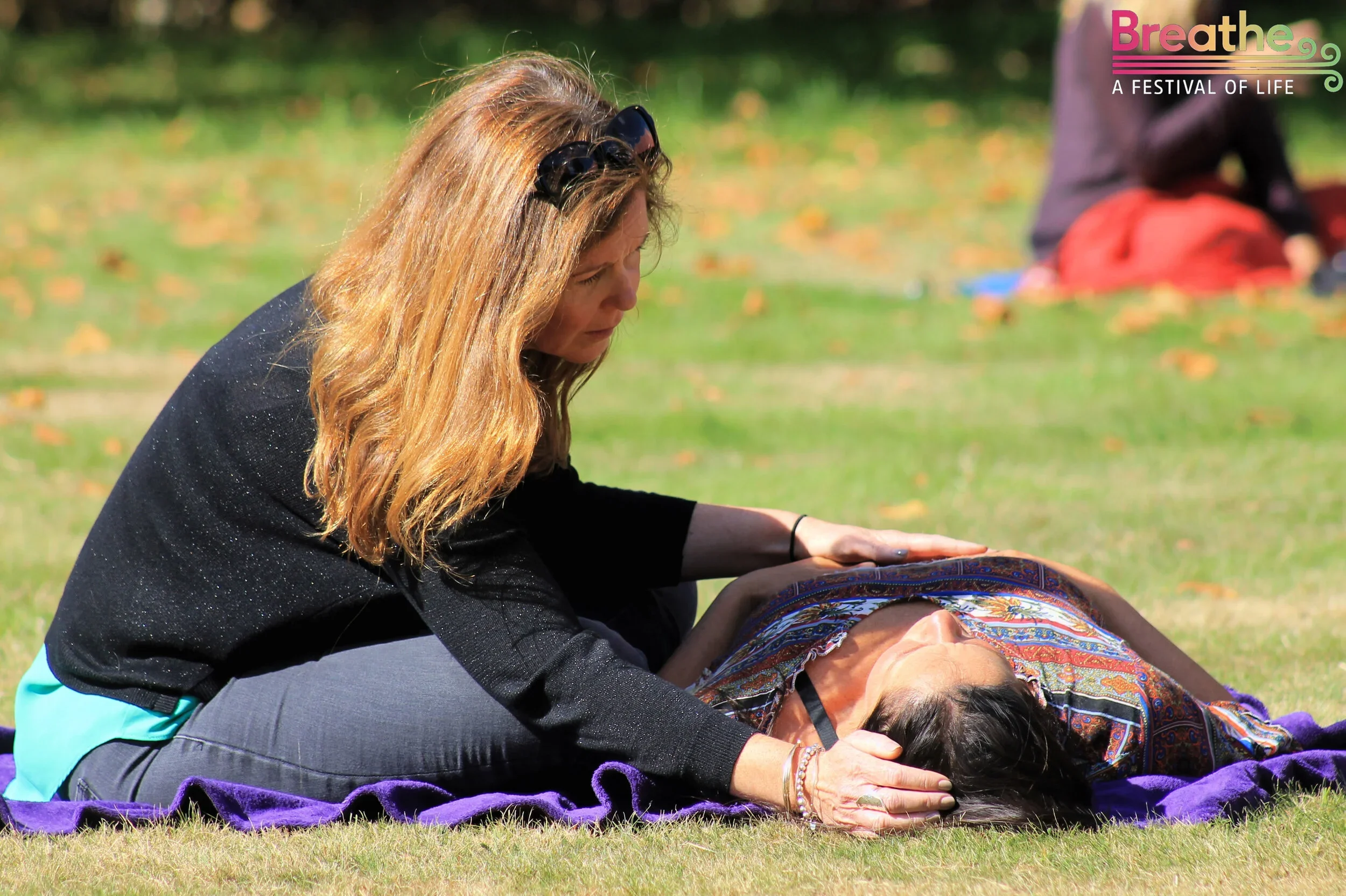
The in breath and out breath are increased in depth and frequency, as if you are exercising. The increased breathing is done while being still, and thereby building an extra energy supply within the body. This excess of energy has a deep transformative effect on all aspects of our being, some feel very relaxed, others may have emotional releases. Many who have had a number of sessions describe a sense of being reborn.
Rebirthing – Breathwork is beneficial for a number of ailments as well as for personal insights and well-being.
The breath work is always done in a safe and nurturing atmosphere where you can relax and reconnect to your breath.
The breath work is easy and for anyone who has reached a point where they need simple and effective change.
The cost is 95 pounds.The session lasts up to 2 hours. 10 breath work sessions are recommended, but not necessary.
All sessions are by appointment only – Late arrival for appointments will result in a reduced session time.
24hr cancellation policy – All appointments cancelled under less than this time are to be paid in full.
Please call me Jacqui Storm at 07868890388
REBIRTHING
Rebirthing is a simple, gentle yet powerful conscious breathing technique. It brings into awareness not only our unconsciously held beliefs and emotions but also the relationships we have with our bodies, ourselves, and our world. When we consciously breathe with this awareness, we make it possible to resolve, integrate and heal previously unresolved issues within ourselves.
This then frees up energy, bringing greater aliveness and joy, allowing us to move towards fulfilment of our potential as human beings. Rebirthing is a powerful healing method which offers you an experience of freedom and mastery in your life. It brings expanded awareness on all levels: physical, emotional, psychological and spiritual.
Cold Water Breathwork
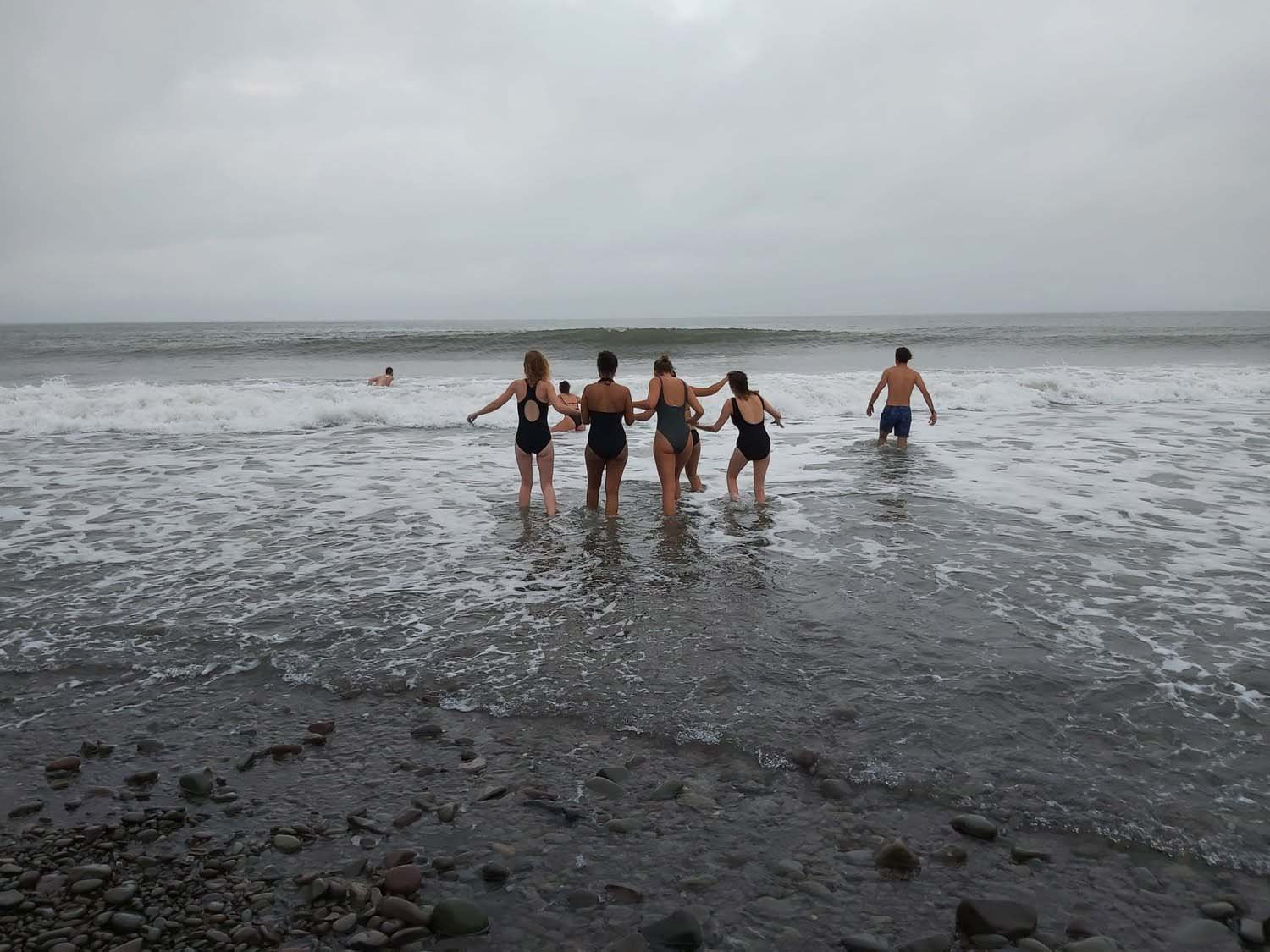
Cold Water Breathwork is a guided, ceremonial practice that takes place in natural water, most often the River Dart. We approach the water as a living presence. Through intention, permission, and listening, we wait for the invitation to enter. The process is slow, conscious, and deeply respectful.
As we gently enter the water, we remain connected to the breath—soft, steady, and present. This is a sacred experience: a deep reconnection with nature and with the ancient, instinctual self within. Through breath and awareness, we allow sensation, emotion, and stillness to arise and be felt fully.
The Symbology
Cold water represents Yang energy and is associated with:
Sun
Spirit
Fire
Death and rebirth
Masculine principle
Daytime
Father
Direction and purpose
This practice invites clarity, presence, and conscious engagement with intensity.
A Note on Safety and Experience
Cold Water Breathwork is an advanced practice and requires experience, sensitivity, and integrity. Entering cold water consciously is not about endurance or force, but about awareness and witnessing.
The primary sensation encountered is often fear. Fear creates contraction, and contraction is experienced as “cold.” When we are afraid, the body shakes. Cold water can therefore activate unconscious fear stored in the body, including early or birth-related trauma. For this reason, the practice must always be approached gently, slowly, and with care—remembering that love is the opposite of fear.
The Purpose of Cold Water Breathwork
To balance Warm Water Rebirthing (Yin) practices
To integrate sensations and emotions related to fear, grief, death, and temperature trauma, particularly from birth experiences
To cultivate greater pleasure, aliveness, clarity, grounding, and embodied presence
Preparation and Method
Fully understand the process outlined below and your role as the rebirther or guide before beginning.
Slowly is holy. There is no rushing in this work.
Ideal water temperature is approximately 18°C (cold tap water in summer; cold water with some hot added in winter).
When practicing outdoors (river, sea, or ice bath):
Go slowly and remain fully present with your client
Support them at all times
Limit time in the water to a few minutes
A simple guideline: maximum immersion time equals the water temperature in degrees (e.g. 4°C = 4 minutes; 18°C = 18 minutes)
Ensure proper aftercare:
Warm layers, dry clothes, thick socks, hat
Blankets or dry robe
Thermos with a warm drink
Avoid hot showers immediately after; begin with lukewarm water and gradually increase the temperature
After leaving the water, keep moving gently to support circulation until the core body temperature returns. Avoid sitting still too soon.
Be mindful of comparison or competition—this practice is not about proving bravery.
The Procedure
Begin conscious breathing before entering the water. Breathe gently into your centre and maintain this breath throughout the experience. Remain the witness to any emotions that arise, relaxing into the breath as much as possible.
Enter the water one step at a time. Place one foot in and wait for the water’s invitation before proceeding. Fully integrate each stage before moving deeper.
Relax into the sensations and notice when major energy centres (chakras) enter the water.
Continue slowly, with full awareness. Total session time may be up to one hour, though most people remain in the water for 5–20 minutes, often much less. If you are working in a river or sea and only reach knee depth, that is perfectly sufficient—the depth is not the goal; integration is.
A supportive approach can be:
Enter the water three separate times
Each time, go slightly deeper if it feels right
Rest, warm up, and integrate between each entry
Always wait for the next invitation before re-entering
After the session, rest in warmth—ideally lying down near a fire. Cover yourself with blankets to feel safe and held. Lie on your back to support energetic flow and continue gentle, full breathing to re-energise the body.
Shivering is common and should be allowed to continue until it naturally subsides. This is part of the body’s integration process as it releases cold and fear held within the system.
Breathing Into Your Embodied Parts
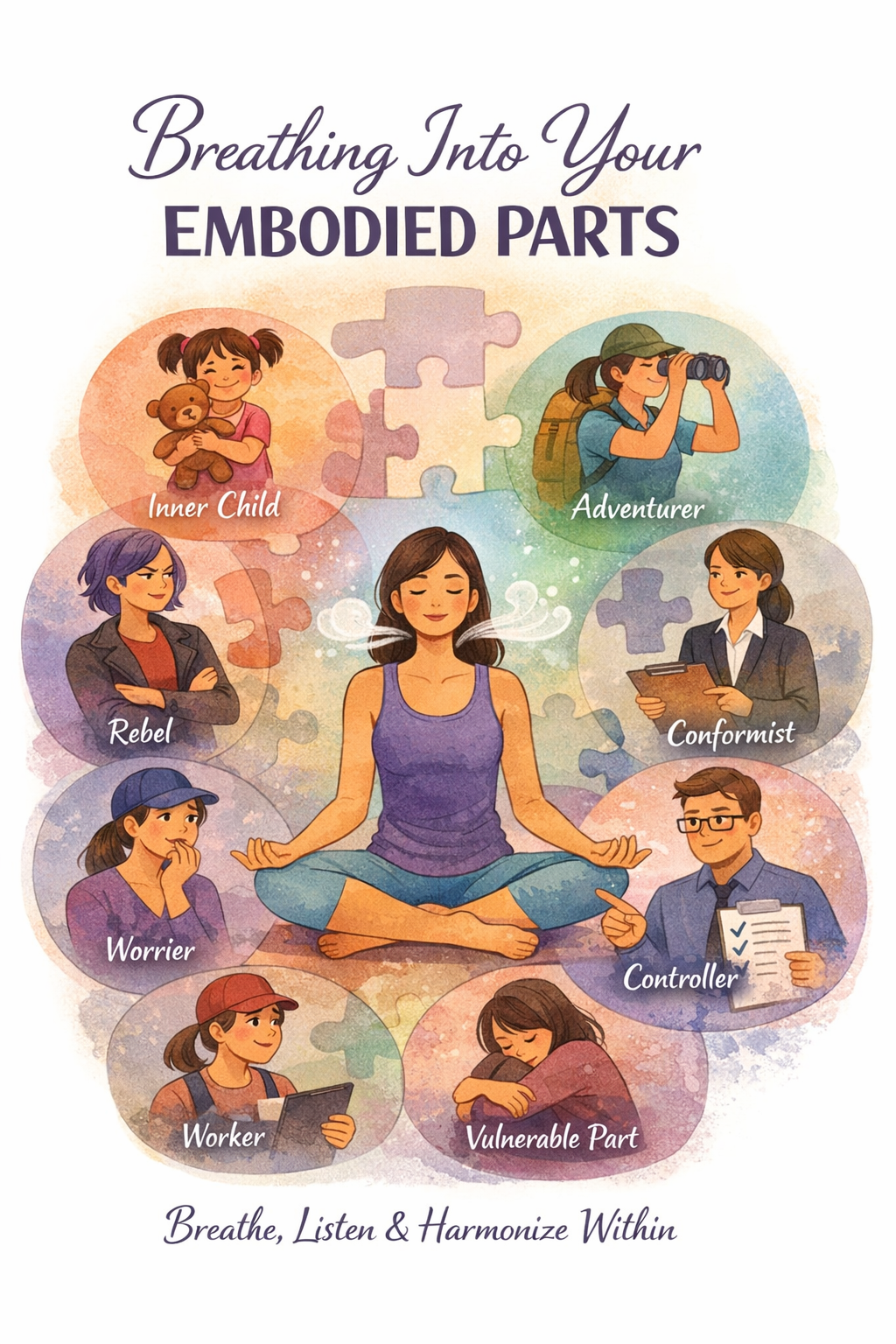
Embodied Parts work is the process of becoming aware of, and learning to integrate, the parts of ourselves that we tend to hide and deny. Here we also include working and supporting our embodied parts with breath.
Parts are psychological satellites, coexisting as a multitude of lives within the overall medium of our personality. Each Part has a style and a motivation of its own, often strikingly dissimilar from those of the others. Another way of describing it is that Parts are the people inside us.
Most of us have probably, at some time, found ourselves talking or acting as if we were two people rather than one. We talk sometimes of being in ‘two minds’ about something, part of you wanting to do one thing and part wanting to do something else. Quite often we hear people talk of having to ‘battle’ with themselves, as if one aspect of themselves was in conflict with another.”
Parts are habits or patterns of behaviour that we have followed since childhood: eg inner child, the very responsible one, the rebel, the organiser, the controller, the adventurer, the saboteur, or the worker. These Parts are often formed during stressful or traumatic times in our lives, as we become more fragmented through life's experiences.
By recognising and working with Parts, the conformist, for example, can be transformed into someone more adaptable, a rebel tendency can become innovation or maybe the rebel and the conformist can work together and develop a new sense of leadership.
Often indecision is the result of two Parts battling. So if we acquaint ourselves with our Parts we may then identify the perfect environment in which they might blossom and thrive.
Subsequently we can establish a middle ground between those that are in opposition with one another such as the bully at work and the meek mild subpersonality at home. In other words, attempt to harmonize our Parts so that we feel less fragmented and more whole.
Functional Breathing, The Breath as a Healing Tool
Breathing is seen as something which occurs without us choosing it – it just happens and there’s nothing we can do about it!
But once we realise breathing can occur by choice, just as much as it occurs automatically, we can utilise it to enhance our health and well-being.
Our breath effects our mind and body. Slow soft deep breathing into our bellies relaxes us and gives a sense of peace. Rapid shallow breathing triggers a stress response.
Habitual breathing patterns are formed very early on in life. As many of us experience stress growing up, it is very easy to get stuck in a pattern of breathing that is not helpful or even harmful to our overall health. It is thought that even something we have no recollection of, such as being born, can have a huge impact on the rest of our lives. Since we are often born in a harsh environment relative to the previous nine protected months, even the very first breath can be traumatic! Other disharmonious events can cause breathing to remain distorted and a tense breathing pattern will begin. If this is continued over an even longer period of time, an underlying physical and emotional tension will develop in the child. When starting school, if the child is already slightly hyper reactive, feelings of being overwhelmed can begin and quickly escalate. Many teachers and parents have observed children reach the point of meltdown.
Stressed breathing can manifest as hyperventilation, or over-breathing, and / or shallow strained breath. Since the breath connects deeply to our primal reactions – those feelings that bypass our intellect – the body can easily get stuck in danger/fear mode with stressed breathing signalling to the body that we are in trouble with the resulting urges any animal has: to act dead, attack or run for your life! Our human intellect usually suppresses these urges but if this stressed response is continuing behind the scenes for long periods of time, it can start to affect us on all levels leaving us feeling lost and like we no longer know ourselves. The symptoms are many including fear, panic and anxiety. We may shut down to the world in depression or become hyperactive, explosive and angry. These are all signs of stress and there is a direct link between stress and mental and physical health. Changing and working with our breathing patterns is a simple way to help reverse the above. The steps that lead to stressed breathing can also work in the reverse. When a client spends prolonged time positively changing the way they breathe, they can and will form new habits, becoming less reactive to their environment. In this way we can reverse a lifelong habit.
So, is it really that simple? The reason breath work is so helpful is both scientific and mechanical. Since breathing effects both body chemistry and hormones, it follows that by changing our habitual breathing patterns for the better and learning some simple exercises, together with the right supportive therapy, it will improve our health. It’s not magic, though it may seem that way since the results are often astonishingly fast! With a little work, we truly can find inner tranquillity and peace.
The cost is 80 - 120 pounds depending on what you can afford at this time. The session lasts up to 2 hours. 10 breath work sessions are recommended, but not necessary.
All sessions are by appointment only – Late arrival for appointments will result in a reduced session time
24hr cancellation policy – All appointments cancelled under less than this time are to be paid in full.
Please call me Jacqui Storm at 07868890388
PRAnayama
A way to our innermost being through very specific breathing techniques tailored for your specific needs.